Top 10 POS Systems to Choose in Nigeria in 2027
By SELL EVERYDAY Team
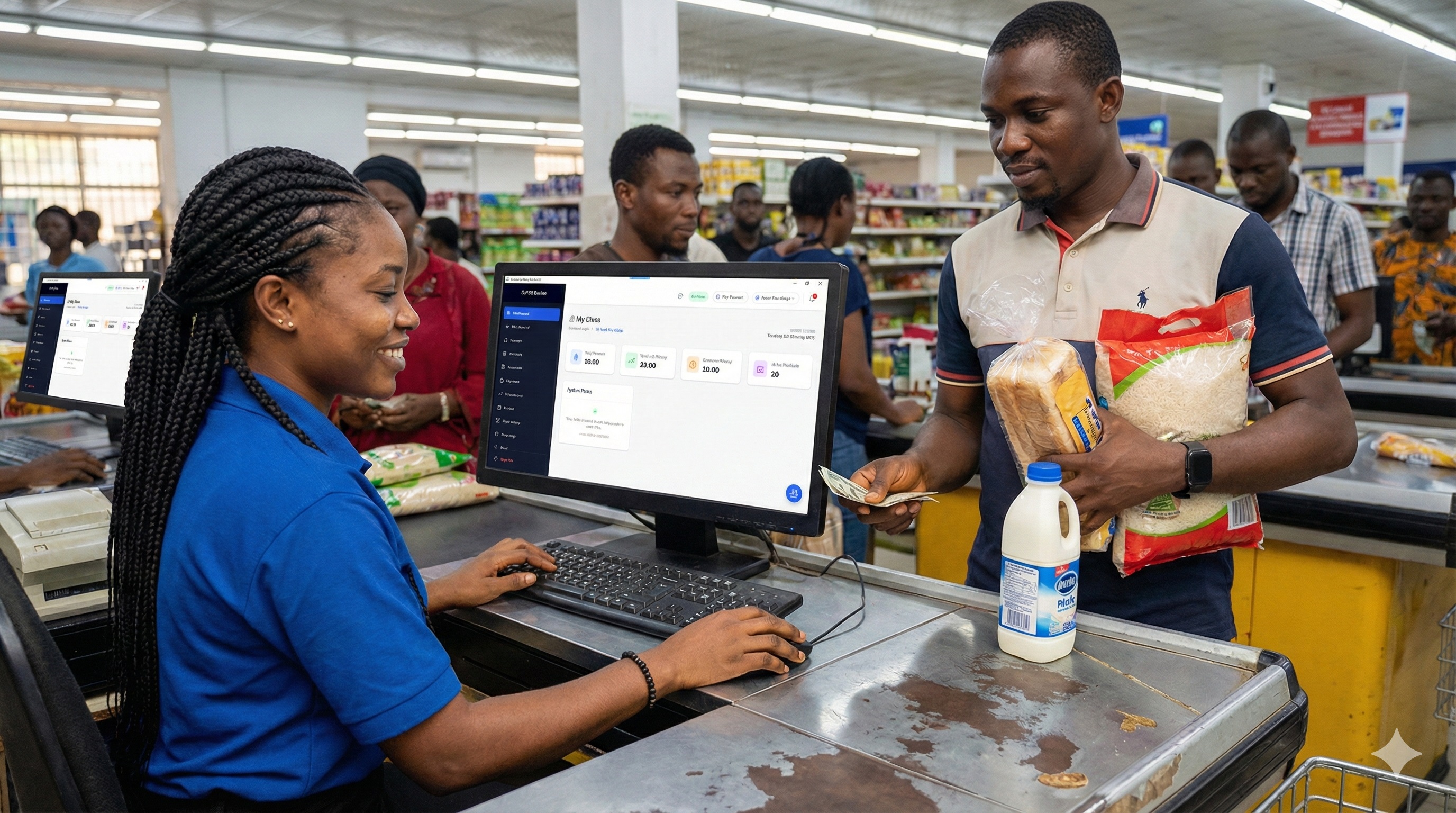
In the Nigerian retail ecosystem, a basic card-swiping terminal is no longer enough to run a profitable business.
Between rapid currency devaluation, persistent diesel and power costs, sudden 4G fiber cuts, and alarming rates of cashier shrinkage, treating your point-of-sale system as just a “payment collection gadget” is the fastest way to leak margins.
A true retail Point of Sale (POS) system is not an agency banking machine; it is the central operating system of your store. It links your physical cash drawer, barcode scanners, wholesale purchase orders, unit breakdowns, and multi-branch sales records into an unshakeable ledger.
Heading into 2027, the Nigerian market is crowded with fintech terminals, global ERPs, and local software startups. But which ones actually survive the daily grind of Nigerian commerce?
We evaluated the top options currently operating in Nigeria across five uncompromising metrics:
- Network Fault Tolerance: Does it process checkouts when internet connections drop?
- Local Payment Flexibility: Can it handle split tenders (cash + bank transfer + card) seamlessly?
- Retail Inventory Depth: Does it support carton-to-unit conversions and weighted average costs?
- Anti-Theft Governance: Does it prevent cashiers from deleting items or overriding prices unmonitored?
- Pricing Stability: Is it billed in transparent Naira, or does it burn foreign exchange in USD?
Here is our field-tested ranking of the top 10 POS systems to consider in Nigeria for 2027.
1. Sell Everyday POS
Best For: Offline-First Retailers, Multi-Branch Supermarkets, Pharmacies, and Hardware Stores.
Sell Everyday was engineered specifically around the operational realities of West African commerce: intermittent connectivity, multiple cashier lanes, and staff shrinkage. Unlike cloud-only web tools, Sell Everyday uses an offline-first local cache architecture. Checkouts, barcode scans, and receipt generation execute in under 50 milliseconds directly from local device memory—even if your internet router has been dead for three hours.
How Sell Everyday Solves Peak-Hour Network Outages:
[Barcode Scan] ──► [Local Memory Cache (<50ms)] ──► [Receipt Printed Offline]
                                                            │
                                                (Network Restored)
                                                            ▼
                                              [Encrypted Cloud Sync]
Key Strengths:
- True Offline-First Local Engine: Operates without continuous internet. Silently synchronizes queued transactions to the cloud once connectivity resumes.
- Hardware Agnostic: Runs on Windows PCs, laptops, Android tablets, and phones. Plugs directly into standard USB/Bluetooth ESC/POS printers, barcode guns, and cash drawers.
- In-Premise LAN License Option: In addition to SaaS tiers (starting at ₦3,000/month), Sell Everyday offers a one-time perpetual license (starting at ₦75,000) allowing supermarkets to run an internal in-store local server with zero recurring monthly subscription fees.
- Unit Breakdown & Anti-Theft: Breaks bulk cartons into single retail units with automatic cost allocation. Every item void or price edit requires manager clearance and creates an indelible audit trail.
Drawbacks:
- Not a payment processor itself. You still pair it with any external bank terminal (Moniepoint, OPay, Stanbic, etc.) for card settlements.
2. SwiftPOS Nigeria
Best For: Traditional Mid-Sized Supermarkets and Department Stores.
SwiftPOS has built a dependable reputation among Nigerian supermarket operators who want a traditional desktop setup. Built predominantly for PC environments, it handles heavy barcode scanning traffic and connects reliably with commercial barcode scales for delis and bakeries.
Key Strengths:
- Mature desktop software with stable local database configurations.
- Direct integration with weigh scales for meat, vegetables, and grain counters.
- Robust user permission roles for supermarket floor managers.
Drawbacks:
- Clunky user interface that feels dated compared to modern web platforms.
- Slower onboarding curve; training temporary sales attendants takes significant time.
- Limited mobile companion support for store owners monitoring performance remotely.
3. Moniebook (by Moniepoint)
Best For: Kiosks, Boutiques, and Single-Counter Shops Prioritizing Unified Payment Collection.
Moniebook leverages Moniepoint’s ubiquitous agency banking hardware to offer bookkeeping, sales logging, and receipt printing on a single handheld smart POS terminal.
Key Strengths:
- Zero Extra Hardware Required: The same terminal that accepts card swipes and transfers handles your receipt printing and inventory lookup.
- Instant Bank Reconciliation: Card and bank transfer payments tie directly to the sales receipt, eliminating end-of-day bank balance discrepancies.
- Ubiquitous Brand Trust: Backed by Moniepoint’s nationwide fintech support network.
Drawbacks:
- Severe Hardware Bottlenecks: Ringing up large grocery baskets on a 5.5-inch touchscreen causes massive checkout delays.
- Hardware Lock-in: If the terminal battery runs out or the screen cracks, your entire sales register is offline.
- Superficial Inventory Controls: Lacks advanced multi-unit breakdown and weighted average inventory costing for complex retail.
4. Tracepos
Best For: High-Volume Mini-Marts and Fast-Paced Checkout Counters.
Tracepos focuses aggressively on checkout throughput. If you run a high-traffic grocery or liquor store in a commercial transit hub where speed is the primary survival metric, Tracepos delivers sub-second barcode responsiveness.
Key Strengths:
- Fast scan-to-receipt cycle (optimized for low-latency scanning).
- Solid offline caching layer that prevents cashier freezes during network drops.
- Clean cashier dashboard with minimal visual clutter to reduce user error.
Drawbacks:
- Less comprehensive back-office accounting compared to full ERPs.
- Multi-branch logistics and inter-store stock transfers are relatively basic.
5. TrackaBiz
Best For: Wholesale Merchants, Electrical/Building Material Shops, and Pharmacies.
TrackaBiz is tailored specifically to Nigerian trade merchants who deal in multi-unit packaging—selling items in cartons, crates, bundles, rolls, or single units. It also features specialized modules for drug expiry tracking.
Key Strengths:
- Multi-Unit Measurement Tracking: Seamlessly tracks stock whether you sell an entire carton or loose units.
- Expiry Date Alerts: Notifies pharmacy managers well before pharmaceutical products reach expiration on store shelves.
- Real-Time Gross Margin Reporting: Shows daily gross profit calculated against purchase cost.
Drawbacks:
- User interface can feel overwhelming due to dense data tables.
- Hardware driver compatibility for older thermal printers occasionally requires manual setup.
6. Bumpa
Best For: Fashion Brands, Lifestyle Retailers, and Social Commerce Merchants.
Bumpa is the dominant solution for Nigerian retail businesses that split their time between a physical boutique and online sales across Instagram, WhatsApp, and TikTok.
Key Strengths:
- Instant E-commerce Website: Automatically spins up a web storefront synced with your in-store inventory.
- Social Media Integration: Generates WhatsApp and Instagram invoice links directly from your POS register.
- Automated Messaging: Sends automated SMS and email receipts, abandoned cart reminders, and promotional campaigns.
Drawbacks:
- Not designed for high-volume grocery or supermarket barcode scanning.
- Lacks local LAN server architecture; heavily dependent on constant internet connectivity to keep online and offline inventory in sync.
7. Nomba POS (formerly Kudi)
Best For: Fast-Casual Food Outlets, Bars, and Neighborhood Retailers.
Nomba has evolved from an agency banking network into a broader merchant utility. Like Moniepoint, Nomba provides smart Android terminals running custom merchant apps with integrated digital receipting and menu management.
Key Strengths:
- Sleek, modern Android hardware with fast 4G and WiFi connectivity.
- Simplified menu-driven interface suitable for bars, lounges, and quick-service diners.
- Dependable payment gateway reliability for instant bank transfer confirmations.
Drawbacks:
- Handheld terminal constraints make it unsuitable for high-SKU retail and multi-lane supermarkets.
- Limited depth in purchase order workflows, accounts payable, and supplier ledgers.
8. Odoo POS
Best For: Large Conglomerates, Manufacturing Wholesalers, and Multi-Entity Enterprises.
Odoo POS is part of the open-source Odoo ERP framework. For enterprises with 20+ branches, centralized manufacturing warehouses, and complex accounting divisions, Odoo offers unparalleled customizability.
Key Strengths:
- Complete end-to-end integration with double-entry accounting, HR, manufacturing, and warehouse logistics.
- Open-source flexibility; can be customized and hosted on private local servers or cloud instances.
- Broad global community and extensive modular plugin marketplace.
Drawbacks:
- High Total Cost of Ownership: Requires dedicated technical consultants or in-house developers to implement, configure, and maintain.
- High Training Overhead: Cashiers and store managers can easily make costly accounting mistakes if permissions and workflows are improperly set up.
- Subscription costs escalate rapidly when scaled across numerous users and apps.
9. Storekeeper / Loyverse POS
Best For: Bootstrapped Startups, Coffee Shops, and Low-Budget Kiosks.
Loyverse remains a popular free/freemium mobile POS downloaded on Android tablets and iPads, while local alternatives like Storekeeper offer accessible starter tools for single-location merchants.
Key Strengths:
- Accessible freemium entry barrier; easy to test on a personal tablet.
- Clean, intuitive touch-based visual product catalog.
- Basic customer loyalty tracking and sales summaries.
Drawbacks:
- Advanced features (employee management, multi-store stock) are locked behind recurring paid add-ons billed in USD.
- Lacks native Nigerian payment rail integrations; transfers and local card terminals must be manually recorded as external cash equivalents.
- Zero local physical support presence in Nigeria when technical issues occur.
10. Global Systems (Square / Lightspeed / Toast)
Why They Struggle in Nigeria:
Many business owners returning from the UK or US attempt to deploy global standards like Square, Lightspeed, or Toast in their Nigerian retail outlets. Almost universally, these implementations run into severe operational roadblocks.
The Reality of Global POS in Nigeria:
- FX Vulnerability: Subscriptions billed at $60 to $150 USD per terminal become exorbitant as the Naira fluctuates.
- Payment Incompatibility: Built-in payment processing relies on Stripe, Square, or international merchant accounts. They cannot connect natively to Nigerian NIBSS rails, local USSD, or Nigerian card debit processors.
- Cloud-Only Assumption: Built for environments with continuous, unmetered high-speed broadband, their web clients choke or lose state when Nigerian network connections drop unexpectedly.
Quick Comparison: 2027 Evaluation Matrix
| System | Primary Target | Offline Resilience | Hardware Flexibility | Pricing Model |
|---|---|---|---|---|
| Sell Everyday | Supermarkets, Retail, Pharmacies | 100% Offline-First | Any PC, Tablet, Phone | Flat Naira SaaS or One-Time LAN License |
| SwiftPOS | Supermarkets | High (Local Desktop) | Desktop PC Only | One-time / Maintenance Fee |
| Moniebook | Small Shops & Kiosks | Moderate | Moniepoint Terminal Only | Terminal Cost + Subscription + MDR |
| Tracepos | Mini-Marts & Groceries | High (Offline Cache) | PC / Android | Naira Subscription |
| TrackaBiz | Wholesale & Pharmacies | Moderate | PC / Web | Naira Subscription |
| Bumpa | Fashion & Social Commerce | Low (Cloud-Reliant) | Mobile / Web | Naira Subscription |
| Nomba | Diners, Bars, Cafes | Moderate | Nomba Terminal Only | Terminal Cost + MDR |
| Odoo POS | Large Enterprises | High (Custom LAN) | Any Modern Hardware | Enterprise License + Implementation |
| Loyverse | Cafes & Pop-Ups | Moderate | Android / iOS Tablets | Freemium (USD Add-ons) |
| Square/Lightspeed | International Brands | Low (In Nigeria) | Proprietary Hardware | USD Subscription + FX Risk |
Final Recommendation: How to Decide for 2027
To make the right choice for your business, look at your primary operational friction:
- If you sell online via Instagram/WhatsApp first, and your physical store is secondary: Choose Bumpa.
- If you run a single-attendant counter and want payments and bookkeeping on one handheld device: Choose Moniebook.
- If you run a supermarket, pharmacy, multi-branch store, or busy retail counter where queues cannot afford to freeze, you need carton breakdowns, and you want to prevent cashier theft: Choose Sell Everyday.
Investing in a POS system that crashes when the internet goes out or allows cashiers to void transactions undetected is a leak no retail business can afford in 2027.